Rug Pads for Wool Rugs: Which One and Why
For most wool Moroccan rugs on a hard floor, the best pad is felt bonded to natural rubber, about 1/4 in (6 mm) thick, cut about 1 in (2.5 cm) smaller than the rug on every side. The felt gives cushion, the rubber gives grip, and the rug edges still lie flat on the floor. For a flatweave or a runner under a low door, choose a thin pad of natural rubber or thin felt and rubber instead. Avoid PVC and other plastic pads on finished floors.
Below: what each kind of pad does, which one suits each type of rug, how to size it and how to protect the floor underneath.
Why a wool rug needs a pad
- It stops the rug sliding. A rug that creeps or bunches is a trip point, especially a light flatweave.
- It takes the load of footsteps. The wool is pressed against a soft layer instead of a hard floor, so the pile and the knots at the back wear more slowly.
- It lets air move underneath. Wool likes to breathe, and a floor that stays dry under the rug is better for both.
- It protects the floor. The back of a handwoven rug is textured. A pad keeps that texture and the grit trapped in it from rubbing a wood finish.
The four main kinds of rug pad
| Pad | Grip | Cushion | Good for | Watch for |
|---|---|---|---|---|
| Felt (wool or recycled fiber) | Low | High | Large rugs held in place by furniture, rugs on carpet | Can move on a smooth floor if nothing holds the rug down |
| Natural rubber | High | Low | Flatweaves, runners, doorways, places where height matters | Thin, so adds little softness underfoot |
| Felt and natural rubber | High | Medium to high | Most pile and flatweave rugs on hard floors | Costs more than a single-layer pad |
| PVC or other plastic | Medium | Low | Little, apart from the low price | Can discolor floor finishes, especially vinyl plank, and breaks down over time |
Which pad for which TAZRIRT rug
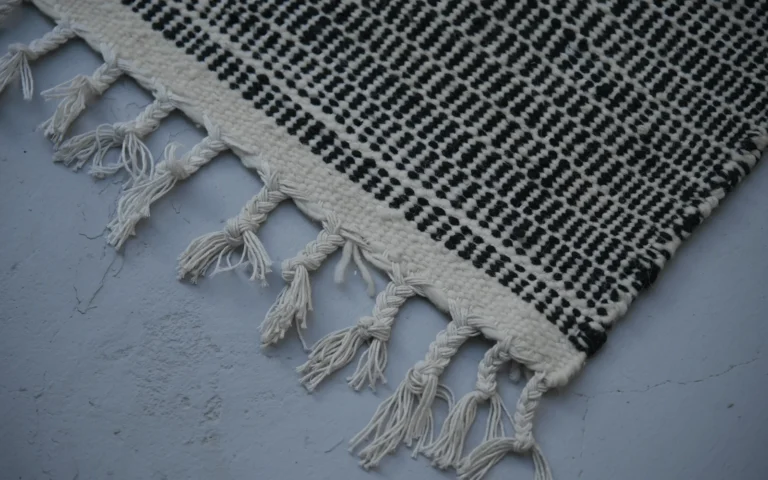
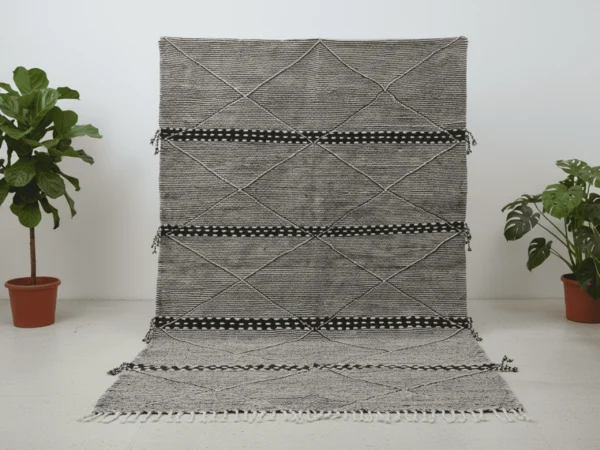
Flatweaves (Zanafi kilims). A flatweave is light and thin, so it slides more than a pile rug and needs grip more than cushion. Use natural rubber, or a thin felt and rubber pad. If you want it softer underfoot, a thicker felt and rubber pad works too, as long as no door has to pass over it. See our Zanafi kilim rugs.
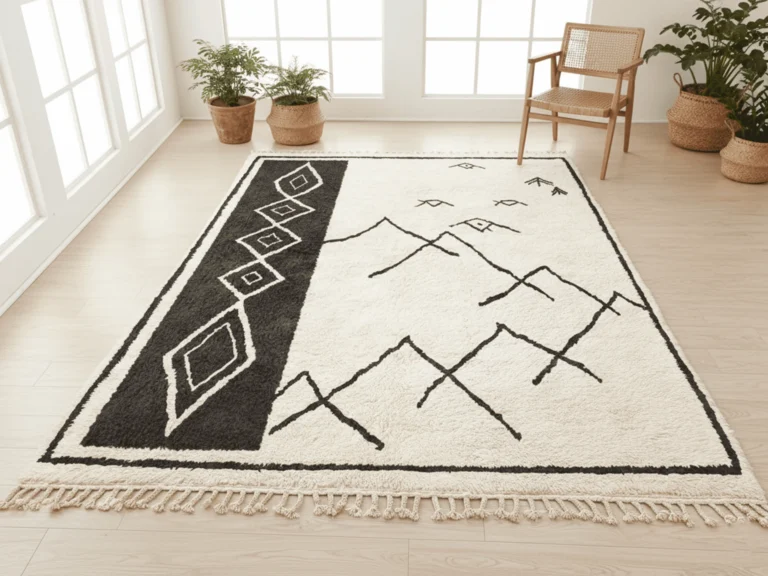
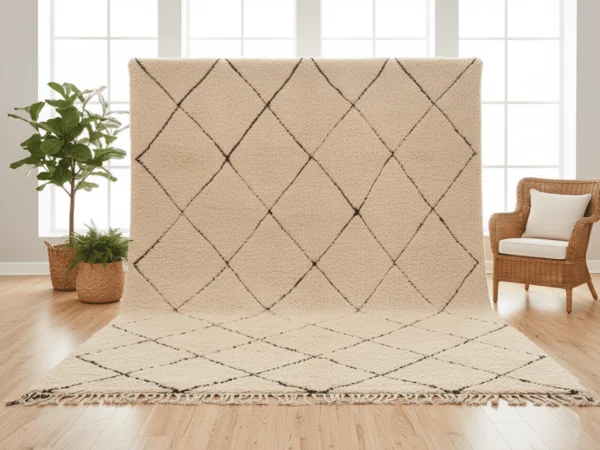
Pile rugs (Beni Ourain style, Boujaad, Azilal, Signature). The rug already has weight and softness. A felt and rubber pad about 1/4 in thick keeps it in place and makes it feel even deeper. In a bedroom, where few people walk and comfort matters most, a thicker pad of 3/8 to 1/2 in is a pleasant upgrade. See our Beni Ourain style rugs.
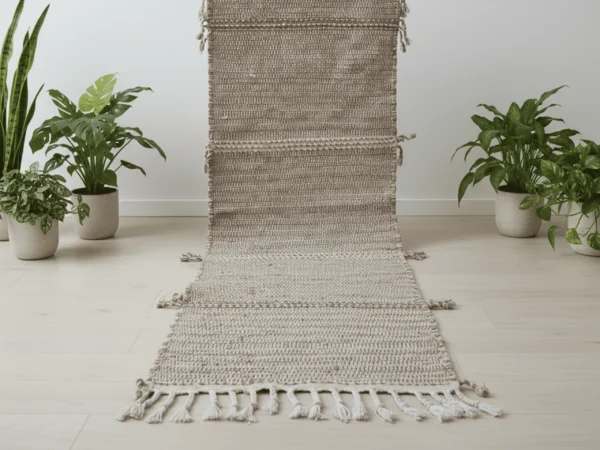
Runners. A hallway runner gets the most traffic and often sits near doors. Use a thin pad and check every door before you buy it: the door must clear the rug and the pad together. Our guide to choosing a hallway runner covers widths, lengths and door clearance, and you can browse our Moroccan runner rugs.
Rugs on carpet. A pad made for hard floors grips the wrong way on carpet. Choose one sold for rug-on-carpet use, which keeps the rug from wrinkling and walking across the carpet.
What size should the pad be?
Cut the pad about 1 in (2.5 cm) smaller than the rug on every side, which means 2 in less in width and 2 in less in length. The pad stays hidden, and the edges of the rug slope gently to the floor instead of sitting on a ledge.
| Rug size | Pad size |
|---|---|
| 5 x 8 ft | 4 ft 10 in x 7 ft 10 in |
| 8 x 10 ft | 7 ft 10 in x 9 ft 10 in |
| 9 x 12 ft | 8 ft 10 in x 11 ft 10 in |
| 2 ft 6 in x 10 ft runner | 2 ft 4 in x 9 ft 10 in |
Most pads are sold in standard sizes and trimmed at home with sharp scissors. A handmade rug is rarely a perfect rectangle to the inch, so lay the rug first, then mark the pad from the rug you actually have. This matters most for a made-to-order rug in a custom size: buy the pad once the rug has arrived, or buy one size up and trim it.
How thick?
- 1/16 to 1/8 in (1.5 to 3 mm): grip only. For runners, entries and any rug a door has to pass over.
- About 1/4 in (6 mm): the usual choice for living rooms and dining rooms.
- 3/8 to 1/2 in (10 to 12 mm): extra softness for bedrooms and reading corners with light traffic.
Under a dining table, stay at 1/4 in or below: a very soft pad lets chair legs sink and catch. Our guide to dining room rug sizes explains how far the rug should reach past the table.
Protecting the floor underneath
- Skip PVC and plastic pads on wood, laminate and vinyl. They can react with the finish and leave marks.
- Watch rubber in direct sun on vinyl. Heat trapped under a rubber backing in strong sunlight can stain a vinyl floor for good. Near a sunny glass door, check what your floor maker allows.
- Ask your floor maker which pads suit a freshly finished or oiled wood floor, and wait until the finish has fully cured before laying any pad.
- Lift the rug now and then. Vacuum the floor and the pad, and let both air. This also shows you early if anything is marking the floor.
Looking after the pad
Replace a pad when it flattens, crumbles or stops gripping. A good moment to check is when the rug goes for a professional clean or when you turn it end for end every few months. More on cleaning, rotation and storage is in our wool rug care guide, and if you have dogs, cats or children, see Moroccan rugs with pets and kids.
Rugs that love a good pad
The short version
Felt and natural rubber, about 1/4 in thick, 1 in smaller than the rug on every side: that suits most wool Moroccan rugs on a hard floor. Go thinner for flatweaves under doors and runners, thicker for bedrooms, and leave PVC on the shelf. Every TAZRIRT rug is made to order in the width and length you enter on its page, so you know the exact size of the pad you need before the rug is even woven. Browse all Moroccan rugs.