How to Tell a Handmade Moroccan Rug from a Machine-Made Copy
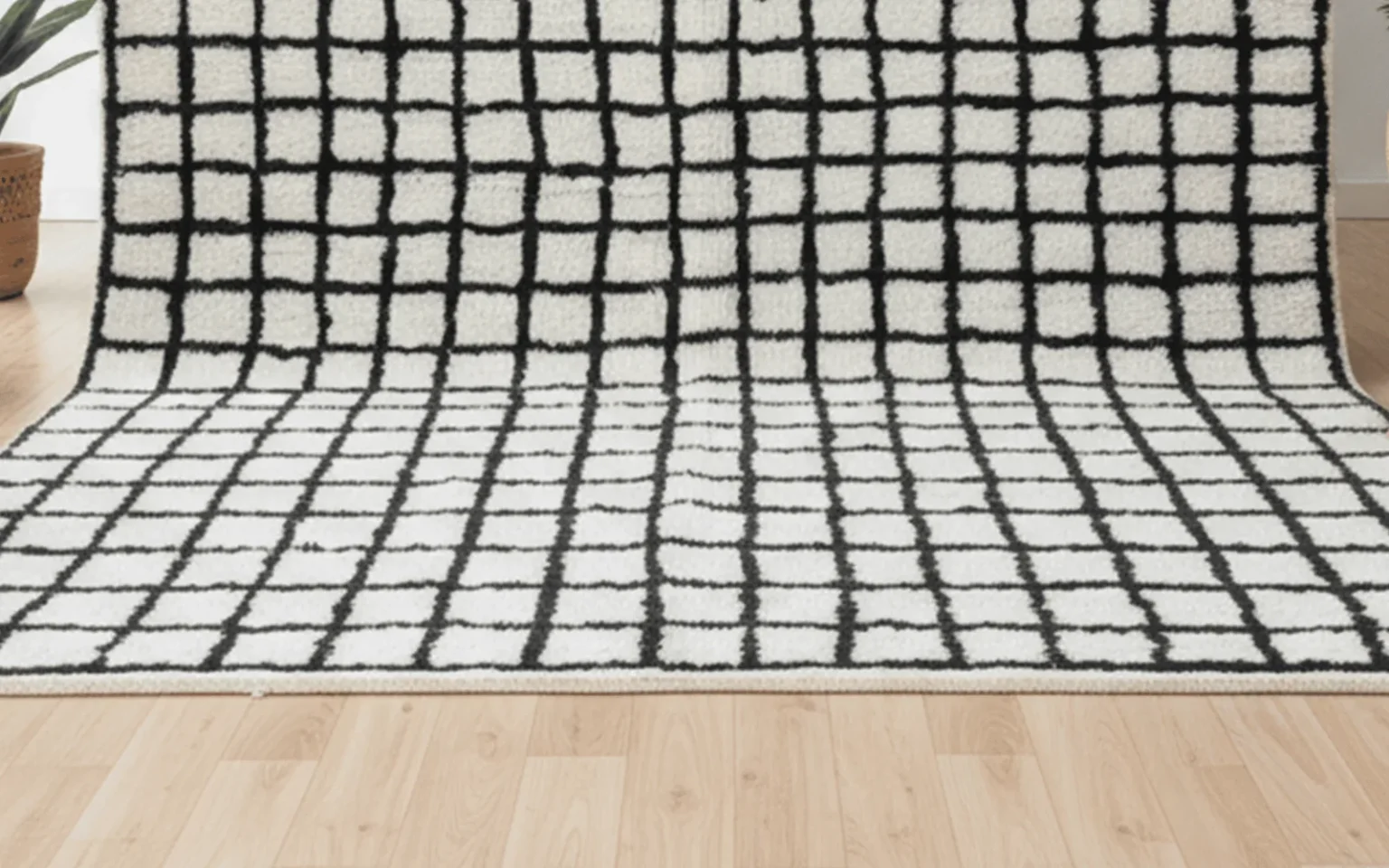
Turn the rug over. On a hand-knotted or handwoven Moroccan rug, the back shows the same design as the front, knot by knot, with small irregularities in the lines. A machine-made copy usually has a perfectly regular back, often covered by a glued canvas or a latex coating, and its fringe is often sewn on rather than being the ends of the weaving itself.
That single check settles most cases. Here are the others, and what they tell you.
Why it matters
“Moroccan style” describes a look, not a way of making. Many rugs sold under the name are made by machine, from wool or synthetic fibre, and printed or tufted to resemble Beni Ourain or Azilal designs. They can be fine rugs for their price. They are a different product from a rug knotted by hand, and they should be priced and described as such.
Six checks you can do yourself
1. The back
On a hand-knotted rug, each knot shows on the back as a small bump, and the pattern appears in reverse, slightly blurred. Lines wander a little, because they were made by hand, row after row. A machine-made rug shows a dense, even grid. A tufted rug, made with a hand-held gun, usually hides its back under glued canvas: if you see that, it is not hand-knotted.
2. The fringe
On a handwoven rug, the fringe is the warp: the threads the whole rug was built on, left long at the ends and knotted or braided. Spread the pile at the end of the rug and you can follow them in. A fringe stitched along the edge as a separate strip is a sign of machine making. (Some handmade rugs have no fringe, by choice. The test only works one way.)
3. Small irregularities
Look along a straight line in the design. On a handmade rug, it will not be ruler-straight. The two sides of the rug may differ by a few centimeters. A motif may be slightly bigger on one side. These are not defects: they are the marks of hands and a loom.
4. The edges
The long sides of a handwoven rug are finished by wrapping yarn around the outer warp threads, by hand. They are firm, slightly uneven, and part of the rug. A machine-made rug often has an edge that is overlocked by machine, very regular and tight.
5. The feel and the weight
Real wool is springy, with a slightly matte, natural sheen. It feels warm rather than slippery. A handmade wool rug is heavy for its size. Synthetic fibre tends to feel smooth and look shiny.
6. The story behind it
Ask the seller simple questions: where the rug was made, how long it took, who made it, and whether you can see it while it is being made. A seller of handmade rugs answers these easily.
| Check | Handmade | Machine-made or tufted |
|---|---|---|
| Back | The design shows through, knot by knot, slightly irregular | Perfectly even grid, or a glued canvas or latex layer |
| Fringe | The ends of the warp, part of the rug | Often sewn on as a separate strip |
| Lines and size | Small variations, sides may differ slightly | Exactly regular |
| Edges | Wrapped by hand | Overlocked by machine |
| Material | Wool: springy, matte, warm | Often synthetic: smooth, shiny |
What “handmade” means at TAZRIRT
Every TAZRIRT wool rug is made by hand in Morocco, in natural wool. Our made-to-order rugs are woven after you order, to the width and length you enter, which is why the product page gives you a weaving time rather than a shipping date. While your rug is on the loom, we can send you photos and videos of it on WhatsApp, until it is finished.
Because each piece is made by hand, the finished rug can differ slightly from the photos and from your exact dimensions. Our ordering guide explains what to expect.
Handwoven in Morocco, in natural wool
A note on price
A handmade wool rug takes weeks of work. A rug offered as hand-knotted Moroccan wool at the price of a machine-made one deserves a closer look. Our guide to what a handmade Moroccan rug costs explains where the money goes.