How to Care for a Handwoven Wool Rug
Vacuum a handwoven wool rug gently, with suction only. Blot spills at once with a white cloth and cool water. Keep it out of harsh direct sun, and have it washed by a specialist when it needs it, not with household chemicals. That is most of wool rug care.
The details below apply to handwoven wool rugs, both flatweave and pile. They are not written for rugs woven with leather: see the note at the end.
Routine care: vacuuming
- Use suction only. Switch off the beater bar or rotating brush, or use the floor-head attachment. A spinning brush pulls at handwoven fibres and wears them early.
- Follow the direction of the pile, not against it.
- Leave the fringe alone. Vacuum up to it, not over it, so the tassels are not drawn into the machine.
- Turn the rug over now and then. At least once a year, vacuum the back and the floor underneath. Grit that works its way down wears a rug from below.
Shedding in a new rug
A new wool rug sheds. Loose fibres left from spinning and weaving work their way out, and the amount drops with regular gentle vacuuming. This is normal, and more noticeable in pile rugs than in flatweaves.
If a tuft or loop stands up, do not pull it. Trim it level with scissors.
Spills, step by step
Speed matters more than product. The sooner you blot, the less there is to remove.
- Blot straight away with a clean white cloth or plain paper towel. White, so that no dye transfers from the cloth to the rug.
- Press, do not rub. Rubbing pushes the spill deeper and roughens the fibres.
- Work from the outside of the spill toward the center, so that it does not spread.
- Dampen with cool water, a little at a time, and keep blotting. Do not pour water on the rug.
- If a mark remains, use a cleaner approved for wool, tested first on a hidden corner.
- Dry it properly. Blot with a dry towel, then lift that part of the rug so that air reaches both sides.
For solids, lift them off with a spoon or a blunt knife before you blot.
What not to use
- Bleach and strong or alkaline cleaners. They damage wool fibre and strip color.
- Washing-up liquid and all-purpose sprays. Many online guides suggest dish soap. WoolSafe, the wool care certification body, advises against it: residue left in the fibres attracts new soil, and some products make dyes run.
- Steam cleaners and hot water. Heat and moisture together can shrink wool and loosen dyes.
- The washing machine. Agitation felts wool and can distort a handwoven rug for good.
- Soaking. A rug that stays wet for long can develop odour, and its colors can migrate.
Test the colors before any wet cleaning
Dyes vary from rug to rug, and you cannot tell how fast a color is by looking at it. Before you put water or cleaner on a visible area, press a damp white cloth firmly onto each color for a few seconds, front and back. If any color comes off on the cloth, stop there and leave wet cleaning to a specialist.
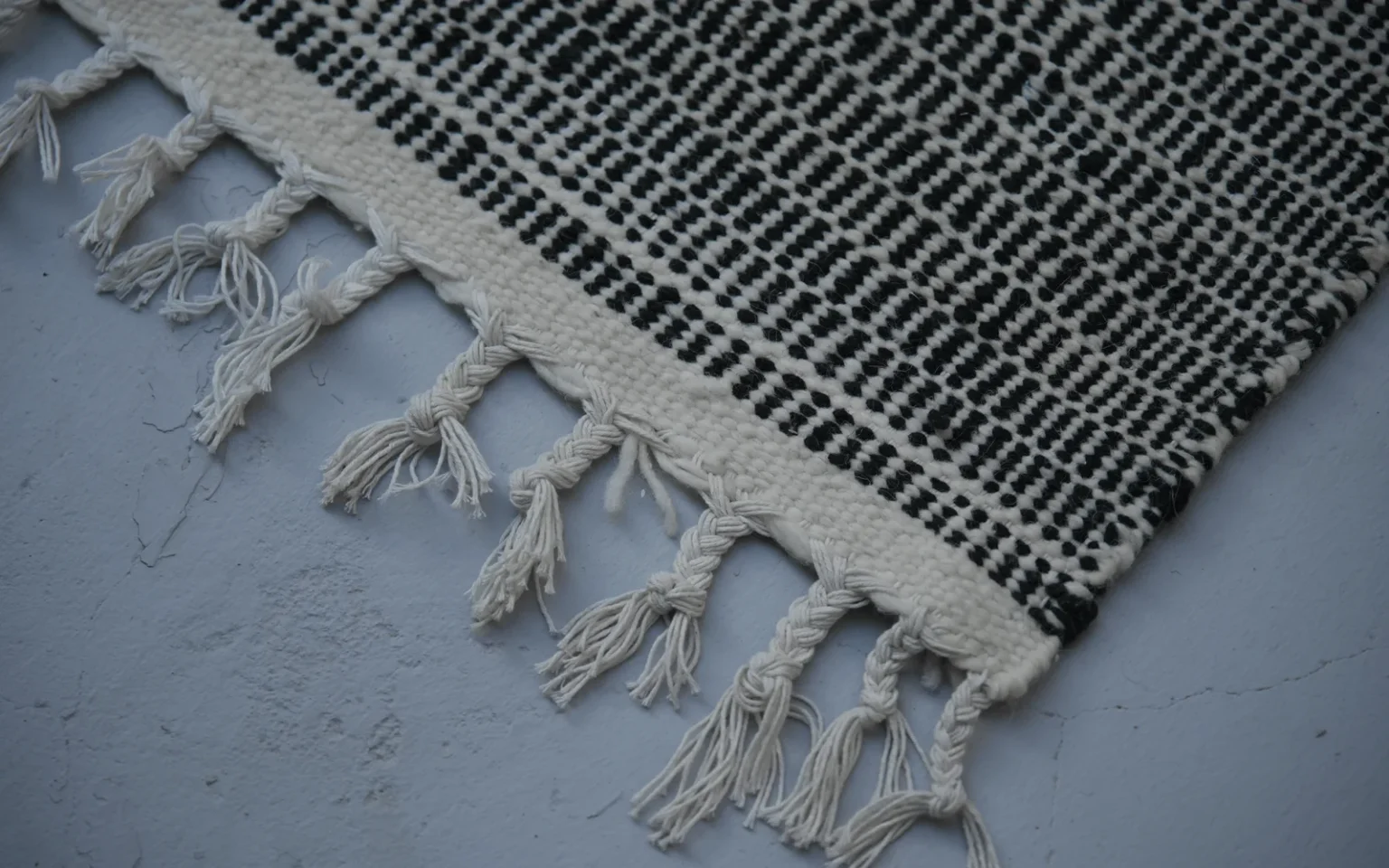
Dark colors next to pale ones deserve particular care. That includes black and ivory patterns.
Sun, rotation and furniture
- Sunlight fades dyed wool and can change the tone of undyed wool. If part of the rug sits in direct sun every day, use blinds at the brightest hours.
- Rotate the rug end for end a couple of times a year, so that wear and light even out.
- Move heavy furniture slightly from time to time, to let compressed areas recover.
Rug pads
A pad keeps the rug in place, softens the load of footsteps and lets air move underneath. Felt combined with natural rubber is the usual recommendation. Flatweaves, being light, need a pad more than thick pile rugs do. On finished wood floors, check that the pad is suitable for your finish before you lay it.
Moths and storage
Clothes moths go for wool in dark, undisturbed places: under a sofa, behind a cabinet, inside a rolled rug in a cupboard. The defence is disturbance and cleanliness. Vacuum under furniture regularly, including the hidden part of the rug.
To store a rug, have it cleaned first, roll it without folding, and wrap it in breathable cotton or paper. Avoid sealed plastic and damp rooms.
Not sure your rug is hand-knotted wool at all? Our guide on telling a handmade rug from a machine-made copy helps before you clean it.
\n\n
When to call a professional
Have a wool rug washed by a cleaner who works with handwoven rugs, not by a carpet steam-cleaning service. How often depends on use: roughly every one to two years in a busy room, and every three to four where traffic is light. Go sooner for pet accidents, for large spills, or for any stain on a rug whose colors failed the cloth test.
Flatweave and pile: what differs
| Flatweave | Pile | |
|---|---|---|
| Vacuuming | Both sides can be vacuumed. Small pieces can be shaken out outdoors. | Suction only, with the pile. Grit sits deeper, so go slowly. |
| Shedding | Little. | More at first, easing with time. |
| Spills | Liquid passes through quickly: blot fast and check the floor beneath. | Liquid sits in the pile for a moment: blot before it reaches the base. |
| Rug pad | Strongly advised, to stop slipping. | Helpful for wear and comfort. |
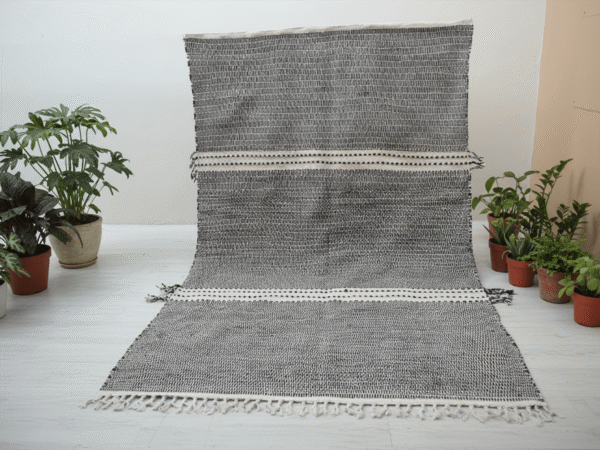
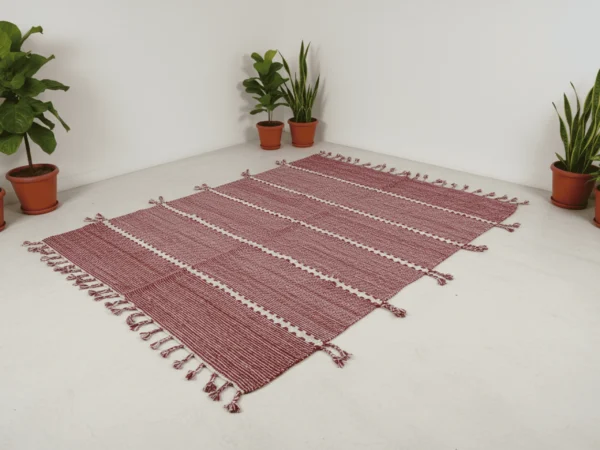
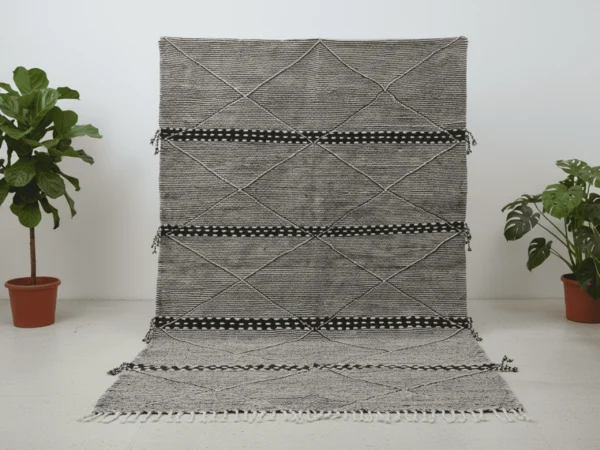
Our Zanafi rugs are wool flatweaves, with hand-finished fringes.
Wool flatweaves
This guide is for wool. Rugs woven with leather strips are a different material and need different care. Do not apply these instructions to them. Ask us before cleaning one.